For one of our homework assignments, we were asked to compare two companies with similar products and see how they set up their website. Below are my findings...
“Points take you places” clear verbal signal on what they want you to do
BOOK is clearly stated by the table to lead you to book a flight
United:
“Your next trip starts now” clearly edging the viewer on to book a flight
Structural
Southwest:
Vibrant colors with numbers created from photos draw the viewer into their promotional credit card.
This is the first thing viewers see
Top of page is clearly defined by what they offer: flight, hotel, car, and vacations; special offers; rapid rewards
The structure for booking flights is clearly defined with boxes and large font
United:
The first thing the viewer sees is a table with flight booking info and check in info. It is located in the left-hand corner, simple viewing as people read left to right.
Visual
Southwest:
All tables/sections are clearly labeled in large white font
Opening page is vibrant with an array of colors, clearly leading the viewer through each section
United:
Main page has changing background photos to showcase different destinations and travelers
Font is upper, lowercased for easy reading and not too aggressive.
Changing background does not interfere visually with the booking table
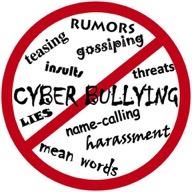
On Tuesday, March 19th, Professor invited us to attend a STEM presentation over Cyber Aggression, where the presenters focused on trolling attacks on specific women for no true reason other than to troll them. This presentation included examples with crude language and depressing content, statistics on women who are assaulted online, and ended with four options to help combat online aggression. This presentation was definitely hard to listen to because of the truth the presenters were sharing. "Trolls" were creating fake accounts just to harass women- tweeting death and rape threats. The language used was terrifying, demoralizing, and meant to shame the women into hiding. Even reading them, I felt scared for the women.
As the presenters started, they wanted to define the differences between "online aggression," "cyberbullying," and "trolling." At first, I was confused. I was surprised that there was a true difference between each term, as I have heard each term used interchangeably. They defined each as such:
Online Aggression: hostile and/or violent content that may or may not be directed at a specific individual
Cyberbullying: Targeted attacks by a known individual
Trolling: Baiting someone to get an emotional rise out of them
In the examples the presenters gave, most tweets included all three of these definitions, and when you look at each definition individually, they all land on a common purpose: Shame. As the presenters focused on the aggression, I noticed they never mentioned why the trolls/cyberbullies were doing this. I recently read "So You've Been Publicly Shamed?" by Jon Ronson, and all I could think about were the examples Ronson gave, where normal people made one false tweet and became the new campaign for online aggression, cyberbullying, and trolling. The idea of publicly shaming someone is so enticing to some because it gives them the power they cannot get anywhere else. Plus, being behind a screen gives others a double life, allowing them to tarnish and ruin people they do not know without ruining their own reputation.
While the presentation tried to give examples to correct the situation, there really is no correct answer. As long as people allow others to shame them, there will always be bullying and trolling online or in person. Shame is what drives those to bully and what continues others to keep bullying.
Elise Verzosa Hurley and Amy C. Kimme Hea inform audiences to use social media for professional success, by outlining the key to students’ lives as technical communicators and future professionals in “The Rhetoric of Reach.” Both Hurley and Kimme are professors who teach a course titled “Introduction to Professional and Technical Writing.” Through this course, students are asked to track their experiences with social media and to engage with audiences, focusing on the reach and crowdsourcing that is possible and hopefully positive to their work. Hurley and Kimme’s main focus is to “examine the effect of the pedagogical heuristic of reach and crowdsourcing as a means to foster students’ critical deployment of social media” as they engage and create a voice (56).
The beginning task for students in Hurley and Kimme’s classes is to disrupt the assumptions students have about social media and their connection and understanding of its effects at a personal and professional level. Many students find social media to take away professionalism and key grammatical expectations of writers as they try to get their ideas out as fast as possible. Other students noted a “carelessness about the craft of writing” by taking away the correctness or care associated with most forms of writing (60). Many students agreed that social media gives everyone a chance to have a voice, but then on the opposing side, with everyone having a voice “great ideas can get buried by so many opinions” (60). This initial breakdown of common thoughts surrounding social media is not surprising nor new. Educated people across all platforms are fighting for a voice, and at the same time, diminishing the very platform that is allowing them to speak. After the students were able to voice their grievances, they were given another project that would change their view to a more positive, constructive understanding of social media.
When rethinking the effects of social media, the growth of people with internet access and media usage cannot be ignored. In 2011 “81 billion minutes were spent on social networks/blogs, 64% of mobile phone time was driven by app use” (57). People around the world are connecting with others using the internet and mobile apps, increasing their social interaction. This statistic by itself is astounding to see, on top of the realization that every person you know, including yourself, helped add to that number. Social media touches everyone personally or professionally whether they want it to or not. Because of this intense consumption, there is a clear understanding by all that while social media positively influences connections with people you know, it can negatively influence connections with those you do not. The horror stories are perfect cautionary tales about poor use of social media and have created a dark cloud that looms over users, reminding them that it could happen to anyone with one false click of a button. This negative, fear-driven thinking is why Hurley and Kimme’s survey of students thoughts over social media is important to dispel if they plan on becoming technical editors and communicators.
After reading the chapters for class, and feeling very confused about all of the lingo, I decided to find a video that would explain one of the most basic concepts. While this video is lengthy, it does a great job of starting from the beginning and walking the viewer through working with HTML and how to create an HTML web source.
On Tuesday I presented over “Extremely Wicked, Shocking Evil, and Vile” social media presence. I had a blast preparing for this presentation and analyzing the social effects of this film. My initial interest in Ted Bundy and his effect on the world exploded into the interest of publicizing parallel stories, such as his ex-girlfriend Liz in the film by Joe Berlinger.
Through completing the research for this presentation, it gave me a deeper insight into the depths social media can go to. It also showed me how much effort and work it would be to maintain a solid social media presence while also creating a film. While Sundance is a huge honor, it can be very closed off from the rest of the world. Filmmakers need to consider the effects poor social media presence can have on the popularity of their film after Sundance.
As I looked over “Extremely Wicked, Shocking Evil, and Vile” social media presence, I was disappointed. So I decided to create steps that would help them stay relevant and publish positive press. The first step I suggested seemed very obvious to me, which was to create social media accounts for the website and then post on them regularly. I think this in itself would build a large following and answer questions of the public. Initially, this will feel like a small push but then will become the main center for communicating with viewers and pushing out information they want populated, instead of allowing other news sources to create a negative narrative of the film.
Overall, this project gave me true insight into what it would take to change the narrative or increase the views of a film. I believe my presentation itself went well. The class seemed very receptive of what I was trying to communicate and I am proud of what I was able to create.
Dr. K posted a link to Fyre Festival's business packet, outlining all of the interesting, cool, hip, and up-and-coming aspects to this new music festival. It was to be hosted on an island in the Bahamas and they had gotten some of the top models in the world to advertise for it. At the same time that I saw this posted in our Blackboard site, I had also just finished watching the documentary on Netflix that explained everything they were trying to do, got away with, and failed at.
Initially, I had no idea what this event was. I heard a buzz about it on social media, but I'm not really into music festivals, nor can I afford to attend one as lavish as this seemed to be. Yet, I was intrigued to learn about their downfall and what was expected to be created. From the film, I learned that Billy (the head of the entire operation) had created a music festival concept, got the top models to advertise it, and got people to pay and sign up to attend, without ever actually planning the festival. Once Billy and the team realized that people were coming, they began to plan for the festival but quickly realized that it was going to cost them billions of more dollars than they expected and they were short on funds, plus they only had 6-8 weeks to put it together, which was not enough time. Furthermore, they had promised people lodging, yachts, and food and because they were on an island, they were unable to actually create what they had intended or thought they could create. These men were so focused on the social media presence and the press that they never actually thought through planning the entire festival (set for several thousand people) and ended up hurting their customers (who actually showed up to mud pit lodging), the Bahamians (who helped them night and day to create everything and never got paid), and the other business people (who had no idea what was actually going on and worked every day to put this festival on). It was the definition of a train wreck and honestly, sad to watch because so many good people were hurt.
From Billy and the team's initial advertising, they did an amazing job. Their video editing, Instagram feed, and business plan were impressive, intellectual, and clean. They had really thought through the image they wanted to portray and they nailed it on the head. This was proven by the fact that they sold out of the festival in a few days, even the $250,000 yacht spots were sold out. People went wild over their advertising. Their video made others want to be there and want to have an experience like they saw. This clearly shows the huge impact social media has on society and society's reaction to clear-cut, enticing products. If anything is to be learned from this experience (besides the obvious failure of the actual festival) it is that people respond positively to platforms that give them what they want to hear and see. People want a life they can edit on social media and giving them chances like Fyre festival is the perfect window to creating the perfect social media life most people are trying to conceive on their own. While I do not condone the heartache and career breaking actions of Billy and his team, I do congratulate him on a well done social media endeavor. He got what he wanted... and also what he did not (he's in jail).
“Situational Editing: A Rhetorical Approach for the Technical Editor” by Mary Fran Buehler, focuses on the argument of whether to edit something grammatically or situationally. As an editor works with a writer, they begin to bridge the gap from writer to reader. The editor is also considered a reader during this stage and has to consider what edit will best represent the work and its meaning. Going against the grammatical edit, Buehler gives examples when rhythm and significance play a more important role than a straightforward, direct sentence. She notes how the best editors work with writers in real time to help with the conciseness of the piece. Overall, Buehler confirms that the situation of the writing is the most important editing viewpoint to deliver the best content, while grammar comes second.
Listening to Beuhler’s argument really struck me because as a high school teacher, I have to teach the grammar component, but then while I am conferencing or grading student work I consider the situation they are in. I also consider their ability and compare that with their product. Buehler gives strong examples, including writing/editing an acknowledgment, that prove how situational editing is more important than grammatical editing. That example really stuck with me because in some senses, I feel that Buehler focuses on situational tone. It is always important to remember what section one is writing or to whom they are writing for. That in itself creates a situation where the editor can “loosen” up or put proper grammar to the side. While in opposition, a technical document needs grammatical structure to be taken seriously.
When defining the two sides, Buehler outlines, “‘Follow these rules,’ says Grammar, ‘and you will always be correct.’” while the other side states, “‘Consider the individual situation,’ says Rhetoric, ‘and you may be able to communicate effectively’” (459). Not only do I agree with these relaxed definitions, but they are the two sides my head argues every time I am writing or editing. Following rules is important when it comes to equalizing your work to a readable level, but if it does not fit the scenario it is meant for, what is its purpose? There is a fine line between these two mediums that if crossed too far to one side can ruin the intention, meaning, or readability. At the very beginning of this discussion, Buehler notes how the word “rhetoric” is used as a synonym for language in the news. Misunderstanding the definition of rhetoric from “solid achievement” to just “language” hints at how many times writers have crossed the grammar vs. rhetoric line (458). This is where editors need to step in and gracefully correct writers to equalize their grammar usage without forgoing their situation.
Buehler defined writing using two important sides: grammar and rhetoric. As editors evolve, they must learn to follow the thin line between the two and help writers become successful at both.
 VS.
VS. 


/cdn.vox-cdn.com/uploads/chorus_image/image/59409351/fyre_festival_0.0.jpg)


